Saturday, 16 April 2016

2015 - A retrospective

So another photographic year comes to a close.

Last Thursday my local camera club held its end of year competition, a sure sign that the club will be soon entering its self imposed hibernation over the summer months

So this is as good time as any to have a retrospective about how the year has gone photographically and to think what I want to do over the coming year.

About the same time last year, I wrote this entry in my blog.

That was a bit of a breakthrough time for me. One photo had come to a hairbreadth of winning and had given me greater confidence and optimism going forward. I had also set myself two goals

1. to improve my black and white images.
2.  to concentrate on the story rather than the image.

So how did that go?

I think the first objective has been largely achieved. I feel my black and white images have improved considerable. My foray into the world of Infra-Red has helped a lot with that, but that has also been a bit of a distraction. I must admit I have enjoyed taking pictures with my infra-red camera more than all my other kit combined, but sometimes perhaps too much. However their reaction in competition and selection has not been as positive as I hoped, so maybe they are not as good as I thought.

Probably still my favorite IR image. I had worked on it using Nik Effects and it did OK in competition. Maybe the only issue with it is the lack of balance with the clouds to the left. 
My second objective has not really been achieved. There are two reasons for this I think. Firstly I found despite the judges rules that the story should make up the bulk of the competition marks, in practice this is rarely adhered to. What I have found is when I have tried to concentrate on the story, the image has rarely done well. While this is no reason to stop, it is de-incentivising to a  certain degree. The second reason is that I am not good in public situations and feel very self conscious with a camera around my neck. I need to get better in interacting with potential subjects.

They always talk about the importance of the story, but a cute bird will win every time. This did well in the DPI section

But what about the photography in general? Do I feel I have improved this year.

Well, yes and no.

Certainly I feel my general standard has improved a notch. However while I am taking fewer poor images, I perhaps I am not hitting to top notes as often.

One thing I have found I have enjoyed is longer term projects, be it smashing light bulbs, or DIY infra-red cameras. What I am not so good at however is those spontaneous shots where you have only a few opportunities to take a shot, but have to be aware of all the various components that allow you to create a photo. In these situations I am to prone to get swept up in the moment and don't concentrate on the basics. Too often have I ended up with shots with boor backgrounds or too high an ISO.

This did really badly in the competition. The judge suggested that the hammer was too bright and over shadowed the subject. You could argue that the hammer is an integral part of the subject, but they may of had a point. I'm still proud of this image due to the technical issues in getting it, but that may of overshadowed the assessment of its quality.
One thing I cannot complain about is my equipment. Despite this blog being largely about photography on a budget I have managed to acquire a lot of new kit this year. Not least 150-600mm zoom and a good mirrorless camera.

Will this make me a better photographer?

No, probably not. But it does give me more options to fail :)

So what about the coming year? What are my plans.

Next year theme competition is on the word 'Emphasis'. I must admit I have only a few ideas at present, so I need to start thinking about that.

One thing I want to do more is Macro photography. I now have a half decent macro prime, so I will be looking for opportunities over the summer to try it out. I would also like to try focus stacking, but will probably need to buy some more software to do that since the free versions are not very good

I will still continue with my Infra-Red, but I probably need to upgrade my camera.While that converted A7S II is still out of reach financially, I have my eye on another old camera make which looks reasonable easily convertible.

I also have an idea for a project. In many ways it will be the hardest thing I have ever done. Not technically, but because it will mean asking strangers to pose for images. I will not say anymore about that at present, but watch this space..

Below are my two best images of the competition night

Despite my complaints about my lack of success in landscape. This did well. Again I worked a bit on it in SilverEfex Pro. It was also taken on my A6000 using the bracketing feature, and processed first in HDR to bring out clouds. So maybe a shape of the things to come
  
I got a lot of nice compliments on this one. Which goes to show it is the ones you nearly don't put in that seem to do best. I had doubts due to the green colour cast, which is natural but some judges may think otherwise. Again using HDR on this one


Wednesday, 30 March 2016

NEC Photography Show 2016


Last year  I went to the photography show at the NEC. I wasn't at the time greatly impressed, and I had pretty well decided not to attend this year.

So of course I did. So what what did I learn?

Well, it was better represented with camera manufacturers than last year, with virtually all the top marks being there including Fujifilm (who were not there last year )and Leica.

A these sort of shows you are limited as to what you can learn. For example it won't allow you to judge how good the images are. However it is a great opportunity to feel how cameras feel in hand and get to grips with the ergonomics, which is an area which is often overlooked in reviews.A good camera should almost be an extension of the photographers arm, in that you should not need  to think to hard when taking an image about how to switch modes etc.

I had always felt that despite being a tad too retro in their design, that Olympus and Fuji were ahead in making there cameras function more naturally. However  I was surprised therefore that I didn't really take to the their products. They just feel cameras too manual and, how can i put this, clunky to use. Certainly I did not feel that they became part of me.

However my award for my special dislike award went Leica's. I was surprised how heavy they were and frankly how bad the poor ergonomics were . I am sure they take great photos, but even if I could afford one, I wouldn't want one. I do feel they are still more fashion statements than a camera to do work with.

As usual I gravitated to the Sony stand, who had a few new products such as the new A6300 and A7R II among others. Because the A6300 is so similar to my A6000, it is difficult to assess how improved it is, but I appreciated that it now has a dedicated MF button, and wonder how they managed to miss that off in the first place.

However what surprised me most was the new A-series camera, the A68.  Now I have had a downer on the A68 since it was announced (that's an understatement - Ed) and while many of my gripes are still valid, I liked in in the hand far more than I thought. I would now consider it as an an upgrade to my A-37. However on the downside it is a heavy beast and the back screen is far too small and low resolution for my liking.

So what else caught my eye this year...

Well as usual I was interested and amused as to what photographic targets  were provided by the stands. Sony put two girls on a bike on a rolling mill, obviously emphasizing the high speed, low light capabilities of their cameras. Panasonic one the award for the most politically incorrect stand with a girl dressed as a peacock, presumably pushing there colour rendition capabilities. Fujifilm just had a girl on a stationary motorbike, which I am not sure what that was to represent.

Panasonic's girl in a weird costume

One way of getting around mirrorless cameras moving subject focus issues

Fujifilm's woman on a motorbike stand

However like the previous year, there did not seem to a lot of new innovative products out there, although it was good to see the turnpro guys had got there product to market.

The one product that did impress me however was Affinity photo processing software by Serif. Unfortunately at present it is MAC only, but they promise a window port soon. It is the closest product I have seen that could be called a photoshop replacement and if the windows version is sold for the same price as the MAC version could really give Adobe the kick up the backside they need.

Of course the purpose of these shows are half exhibitions and half retail opportunities. I must admit I got caught and bought a 55-210 lens for my A6000. OK, it was a bit cheaper than online, but you have to take into account that I had already paid £13 for a show ticket and the exorbitant £12 for parking, so if you take all that into account it probably wasn't really much of a bargain.

Photographer extraordinaire Bob Martin with one of his iconic images behind him


However the best bit of the show was listening to Bob Martin , who was giving a talk on sport photography on the Nikon stand. Bob has produced a number of iconic and award winning images over the years and he gave some great advice. Some of the outstanding points was how he concentrated on the background more than the subject to make his images stand out, his use of wide angle lenses (apparently you need a really fast shutter speed) and his use of mirror lenses to create interesting Bokeh effects. He was also very honest in how much luck played a part in creating some of his most famous images.

So it was a mixed bag. Again I felt the exhibition could do to more celebrate photography, rather than just extact money from photographers. I'm not sure that the NEC is the best venue for this sort of show. However it was fun to play around with all the cameras and listening to Bob Martin was a eye opener.


Yes, you too can be captured in plastic


Sigma line up


Saturday, 20 February 2016

Wisdom of the crowd part deux

Less than popular

Previously I had written about judging the merits of your own photo and the dangers of asking the opinion of others.

Last night we had another selection evening for the MPS, this time for our upcoming competition against Derby. As always I dutifully put in my 3 DPI's and 3 Prints to be part of the selection process ,where the top 15 in both category go forward to represent the club society.

Now recently there has been some controversy in the club about how we choose images for external competition. It used to be via a show of hands, but that was thought (rightly) that it benefited those with the biggest personalities in the club. So the club now uses a system of blind voting, where each member can tick the images they like with the top 15 going through.

So how many of my images got voted through...

Well in round numbers .....0, nada, zilch

What was more disturbing to me was that when I looked at the overall number of votes, was how few marks I actually got. While the top images got 18, some of mine only garnered 2 (and one of those votes was mine).

So what does that say about my images.

Well obviously they were not popular with the club membership (remember there were no limits on the number of votes a member could cast). However the real question is, just because they were not popular, does that make them bad?

One of the issues of such a blind voting system is that people tend to get get drawn to certain categories of photographs in which they are comfortable. In these situations a great picture of a puffin or a nice landscape is almost always likely to triumph. In fact when the results were collated it stood out that we had a surfeit of landscapes over say portraits.

Of course lack of popularity should not be the final arbiter of an images quality. I am currently doing the MOMA Cousera course on photography  and wonder how images from some of those now held as greats of photography, such as Alfred Stieglitz and Paul Strand would do, if entered in a club competition today? Again would  such a failure somehow invalidate the esteem their work is held in?

So should I just throw my hands in the air in a huff and blame the audience for not having the wit to understand my artistic merits?

Of course not.

To do so would be presumptive in the extreme. Firstly I would be making the assumption that my work has actual artistic merit, rather than the audience seeing the flaws that I cannot. Without any backlog of successful work as a foundation I have no basis to claim any superiority over those judging it. Secondly by assuming that I know best, I refuse the opportunity to learn from my failings.

But should I eschew any attempt at popularity?

This is a difficult one. I feel we should not compromise our photography to just pander to the collective. On the other hand creating a photograph that resonates with a wider audience is a skill that also needs to be mastered like any other artistic technique. The challenge is to balance the need  for self expression and how much you restrain yourself to take in account the needs and desires of the audience.

Without this, there is always the danger of slipping pseudo intellectualism, and the blind artistic alleys that this will lead.

So again we need to learn from failure and look again at aspects of our work. Specifically what are elements of a photograph that make it stand out to a crowd.

Friday, 12 February 2016

Why did they take that?


Last night we had our Annual inter club competition between MPS and Ashby photographic club. where we pit the 30 of the best prints and DPI's as chosen by the members in an open category.

The club membership had only deemed one of my photos worthy, which was disappointing but fair enough. However it at least it allowed me to have some cards in the game, so to speak.

The image that was selected was the one of hammer smashing a light bulb

As it was my image was one of the 1st to come up and I was eager to hear the advice that the judge had to impart...

Judge :- "This image is technically very good"

Me : - "good start" I thought

Judge :- "But I can't see why they took it"

Me :- "WTF!!!" I thought

In the end the image was awarded 14 marks which was the lowest mark the judge made all competition. What was worse was that this was the only time the judge made that comment, so either he was not being consistent in his marking, or there was something specific about my image he could not relate too.

Now normally I tell myself to let judges comments slide off me like water of a ducks back, but I must admit this one really got under my skin and I let it affect the rest of the competition and the inevitable pub post-mortem.

So much so, that I did something I rarely do in competitions and actually questioned him later about his comments.

His explanation was that he had been reading a book by Susan Sontag, the long time partner of the legendary photographer Annie Leibovitz. In this the author had said that if something does not connect to you directly then it is worthless.

To me this is a difficult concept to understand. If we consider anything we do not understand or relate to as worthless, we are setting ourselves up as the ultimate arbitrator  of worth. If we do this, we are denying the chance that someone has seen something that we have not and therefore closed our mind to the chance of learning.

For example, there were a number of images last night that I could not understand why the photographer had taken them, or what the photographer was trying to relay. But rather than closing my mind to them, it made me curious to investigate and work out  why some saw things I could not. That is the way we learn; not by pretending that all that is closed to us is worthless, but by accepting that we must always re-evaluate our opinions and prejudices

Now maybe it is a requirement for a judge to remove ambiguities from their opinion, so that they can have clarity in their judging. However to me it is disappointing that a judge cannot move beyond their personal opinion and try and put themselves  in the photographers shoes.

Again I think the most disappointing thing is that the same comment could be said of many images last night and many images generally. Personally I cannot understand why anyone would take the same image of the millennium bridge in London, which has been photographed many times or a "bird on a stick" (however competently done).  However I am willing to accept that to they have a reason for taking it.

Saying that the one thing I probably would of changed last night was the name of the photo because it perhaps would of more clearly identified my reason for taking the image. However since the judge freely admitted he took little notice of the title, it would of made little difference in the result.

The judges other comment was that he felt the image did not add anything to the genre. Well here I am guilty as charged (a little judge joke there). However in my defense, if that is the criteria we judge images, 95%  of competition images should be thrown away now.

You rarely see anything in a competition which even pushes boundaries, never mind breaks them. Be it a photo of a waterfall, a picture of a mountain, a bird on a stick, or a portrait; in almost all occasions I have seen it done before and better. However that does not in anyway devalue the image.

Also this is the nature of competitions. Photo presented have been filtered in most part via the opinions of the member. Unfortunately it is also true that most images are chosen on the basis of how well they will do in the competitions. This has a tendency to remove the outliers because they are considered to risky in such a context.

If there were genre breaking photos, they are almost certainly been removed from the pile a long time ago like a dangerous mutation is removed from the gene pool.

However I did take some things away from last night.

Firstly is a realisation that while it is important that you learn from the great masters of art, you should not follow their advice blindly. After all we have no context to understand how they came to their opinions. Instead we should only use it to test our givens in the hope that it might reveal new insights, perhaps ones which are unique to you as an individual.

Secondly, judges opinions, while valued, are just that one persons opinions. They have a more value doe to their experience, but if you let yourself  be led purely by those opinions you just become the equivalent of a fake Rolex. Good but a poor copy of the original.

So you have two choices. Follow the accepted opinion, or have the courage to follow your own path. One way is harder, but ultimately more rewarding.

I know which way I'm going...


P.S the club won the competition last night


Sunday, 7 February 2016

Weather for ducks

Even ducks get sick of rain


Had my 1st opportunity yesterday to go out with my new toy, my 150-600 Tamron zoom.

Now I know this blog is about photography on a budget and such lenses are expensive, but I had my reasons for getting this lens.

Firstly I had a windfall that had to be used before it was frittered away with life essentials. Secondly this lens is fantastic value (so I told the wife anyway). To get this sort of reach, normally you are looking at 2 or 3 times the cost. Thirdly, you sort of know when you need a certain lens because you are constantly frustrated by the inability to do what you want.

In the last case, my longest lens was 300mm, which was just too short for decent wildlife shots.

On the downside, apart from the cost, is that for this price you are not going to get a really fast lens. Also this is quite a specialist piece. It is not a lens you would carry every day so limiting its use. Finally annoyingly it appears that Sony lens always cost 10/20% more than the equivalent Canon/Nikon lens from the same manufacturer. This is despite unlike the Canikon models it does not have the optical stabilisation(Sony A-Series have it built in ).

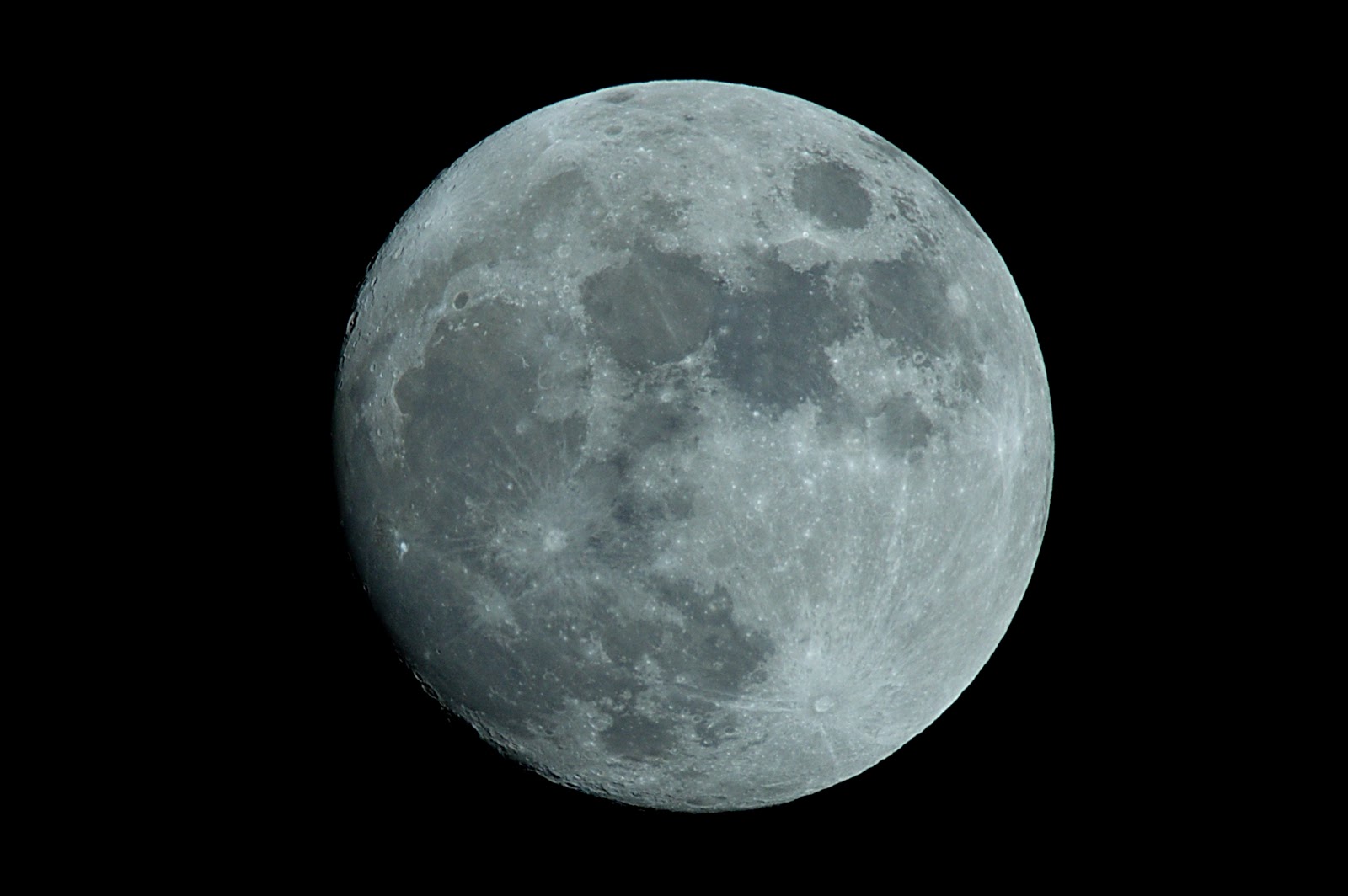
I've had the lens for about 3 weeks now, but my chances of trying it out have been limited by circumstance and weather. Taking pictures at birds in the garden through double glazing were never going to show the lens in its best light(sic). So the only thing I managed to take a photo off was my perennial target, the moon, Saying that, the results were quite impressive.


However yesterday I had a chance to go on a photography session at a local nature reserve at Attenborough so I thought it would be a perfect opportunity to try it out.

Of course I was hoping for good light. What we actually got was par for the course this winter which was torrential rain. So it wasn't exactly perfect conditions. However despite this the results  were really quite good.

The extra reach really helped to get photos I would never of managed before. The downside were that because this was not that fast and the light was awful, I was forced to push the ISO higher than I wanted so had more noise.

The other impressive thing is the speed of the zoom and focusing, plus how quiet it is which is essential for birding.

In terms of handling, I had taken a monopod, but in the end I found I could handhold it or rest it on the  hide wall quite well. The downside is that it is a big lump to carry around and because of the weather I was forced to have the camera under the coat most of the time which definitely was not comfortable and probably made me look a bit weird. Also this is not a camera to take photos of birds in flight easily.

I did buy a sling strap for it, but I have not built up enough courage to risk it with such an expensive bit of kit, but in the long term I will have to use it if I go out a lot with this lens

Anyway here are some of the results

A young Grebe from the hide.

A red crested pochard. This was a bit of a cheat, since this is obviously a escapee and relatively tame, but the long lens allowed me to get far greater detail


A tufted duck. Not rare but nice to get close in

Probably the best 'bird on a stick' image that I have ever taken. A still subject, plus the extra reach really helped. This was handheld, even so it is sharp. The bokeh is nice too, being blurred but not indistinct.

An Egyptian goose giving me the evil eye

A female mandarin duck


A long range shot of a Goldeeye. While no a keeper, no way would I have got anything close to this before

Similarly a pair of widgeon

Conclusion

For the money this lens is fantastic value. While it is not going to get you the same image quality as a fast prime, in good light it will deliver and at the same time give you the flexibility a zoom provides.

However this is not a lens you carry around all the time. It is bulky and large. A sling type strap is essential to carry comfortable and a rain cover is useful too.

So all in all i am very happy with the lens. All I need know is the opportunities to use it in good weather

Thanks to Iain McMillan for spending the morning with us and providing advice, feedback and humour on a pretty awful day weather wise

P.S if anyone finds a Lens case at Attenborough its mine!

Wednesday, 20 January 2016

Four of the best

This week is the annual club panel of 4 competition. After the last club competition where I felt a little aggrieved by the judging(a little? really? - Ed.) I feel a lot better about this competition.

Of the call the club competitions, the panel of 4 is probably my second favorite after the theme competition.

The idea is to present 4 photos in a panel. There are two entries, one in print and one in DPI.

The fact it is 4 photos (and not three) is far more significant than it first seems. You need to find four photos with some association but of consistent high quality.

For some reason the rules of the universe state that the fourth one will always be the challenge. I have lost count of the  number of times that I found 3 great photos, but could not find a fourth of a similar standard, so had to put them on one side.

The reason why I like this competition so much is the DPI photo in particular provides plenty flexibility for experimentation.  While the majority of entries will consist of 4 standard rectangles, there is nothing in the rules to stop you putting 4 photos together of any size and shape.

Personally I love to play around with different patterns. I have some great ideas for panels of horizontal or vertical slices, or even overlaying images on top of each other.

Unfortunately the competition only has 1 DPI. This means that I cannot experiment as much as I would like, bit it is a format I would love to do more in. The print entry however is more limiting.

My original idea was a set of images called fruit puns. Unfortunately this did not work out as well as I hoped due to time issues and the fact I could only think of 3 really good puns (as the universe decrees). I liked the result, but in the end I did not think it was strong enough (but it was fun to do, and I would of loved to see the judges reaction).

4 fruit puns


So instead I did some work on flowers.

I have been interested recently in taking low key flower pictures using a flash. I have little experience with flashes, so I wanted to experiment and find out how to use it better. So I bought myself a cheap soft box and a adapter. These were mounted on a old tripod and I used a radio trigger to sync the flash and allow it to illuminate the side of flowers in a darkened room with a black background.

1st results


I had an idea of using number of different flowers, cropped closely against the flower head. I would of loved to have used wild flowers such as dandelions, but being winter I was forced to buy cheap bunches of flowers from the local supermarket (much to my wife's annoyance when she found the flowers were not for her).

In the end however instead of different flowers, I felt the rose images were stronger. I also realized that I could play around with the images shapes to put together a panel with a different, and to my mind more interesting layout.

This is the final result and I am quite pleased with it. so much so I really don't care how it does in competition


The print entry were harder  to decide on.

I came up with 4 different sets. None of them were taken specifically for this competition, so it was a process of seeing what I had already and connecting them together. They all had their merits, but in the end I came down with 4 IR images of a tree. This is probably going to be the last time i enter IR images, so hopefully they will be far more successful than last IR images I entered.


Postscript

My prints got 18/20 which was a welcome surprise while my DPI also got 18, which was a bit of a disappointment. To be honest with the DPI I was surprised to see once they were on the big screen some of the dark backdrop came through, which was surprising since I thought I had darkened the blacks enough.

The judge also made a big thing about progression. i,e a story carrying through the set of photos. To be honest I had not really considered this in my entries but it is something to work on next year.

Also congratulations to Lorraine Dowell for winning her 1st competition last night.


Chasing sunrises


Despite the dark and dreary weather at present, one of the compensations of this time of year is that, sunrises occur at a reasonable hour and when they do occur they can be spectacular.

As a part-time hobbyist photographer, actually getting out and taking sunrise photos presents some challenges.

 Firstly this can generally only be done at weekends and even then I have to work around the family commitments. The weather unfortunately rarely kind enough to meet with your schedule, so you can get into the frustrating situation of driving to work through fantastic sunsets, only to find them disappear once the weekends have arrived.

As a consequence I spend a lot of the week studying weather forecasts hoping  that the weekend weather will be good. However even if weather does look OK on the Friday night, there is no guarantee that this will result in a decent  sunrise. Over the Christmas holidays I made a special effort to get out to a sunrise. I examined the forecast, and it seemed promising therefore I rose early, crept out the house, climbed a hill in the dark and setup my camera and tripod.

The best I got for getting up on a cold December morning
However the sunrise never came. I could see the clouds clearing to the west, but by the time the sun started rising they were still covering the sun, so I got very little apart from cold hands.

Predicting a sunrise is an art form that so far I have failed to master. The 1st issue is predicting exactly what the weather will be at sunrise. This sounds straight forward, but most weather forecasts are incredible imprecise in this regard. You want to know what the sky will be like within that short sunrise period, but generally forecasts are only given within a 2 hour period. In the UK you can fit a lot of weather in 2 hours.

Secondly the actual weather is not the only variable you have to factor in. The quality of the sunrise is very dependent on the cloud layer and how high it is. The best sunrise picture have some cloud of them that reflect the morning sun. However you want broken cloud, otherwise the sun will never break through. Your general weather forecasts provide little info in that regard. They will say if it is sunny or cloudy and that's it.

In truth the best method to predict a good sunrise image is to get up about an hour before dawn and peer into the night sky and try and work out what is up there. This is easier said than done in the dark but normally you can see if any stars are showing.

Even then you can never be sure what you are going to get. Take yesterday for example.

The previous nights web weather forecast was unpromising showing cloud.  The local TV one more promising, but annoyingly imprecise, showing clouds maybe moving away just before sunset.  In the morning things did not look promising, but after staring at the sky for a while, I noticed the cloud had some breaks in it.

In fact it was what is called a mackerel sky, which is actually a fantastic cloud for sunrises.

Unfortunately that left me with a dilemma and with sunrise approaching in 45 minutes little time to do much about it.

Since day was a work day in theory I should be making my way down the motorway at this time, but fortunately I have flexible working hours so I can adjust when I start. Even so, it is not something I do lightly. But things seemed to good to miss. So while there was a chance I decided to go for it and i set off to a spot I had staked out a few weeks earlier (only to return 5 minutes later when i realised I had not packed my tripod)

One of the other issues with sunrises and sunsets is where to see them best. Obviously sunrises happen everywhere, but to see them at their best you somewhere with few obstructions like buildings or trees.  Being high up is good, but if there are no hills around you want somewhere flat. I personally think the best sunrises are where there is water to reflect off. Unfortunately being as far away from the coast as is possible in the UK,  the sea is generally out, so instead I look for lakes, ponds, rivers or canals. You also want the water to be flat and calm on the day.

You also need to work out where the sun will appear. If you are going to a river or canal obviously you want the sun to appear up or downstream top get the best reflections. There are quite a few apps that allow you to predict when and where the sun will come up, however I like to use a website called suncalc to try and work out where best to stand.

Like I said I already had a spot in mind. There has been some extensive flooding recently, and where  the canal meets the river had caused local flooding with wide stretches of flat standing water which was in the perfect place to catch the sunrise.

Or so I hoped. In truth I had not been back for 2 weeks, and there was every chance that the water had drained off, which was why I was so desperate to get down there.

Also there was the little matter of getting there. This involved driving to the nearest car park, putting on my wellies(much better and quicker than boots for this kind of thing) and walking the 1/4 a mile or so to the spot. Obviously sunrises do not wait for anyone so it was a rush to get there and setup. It also meant I had little time to find a good spot and setup the kit


But in the end it was all worth it. The sunset was a stunner, I got some good shots and even managed to get some pictures of a group of Goosanders for a bonus


The sunrise in all it's glory

The added bonus of a group of surprised Goodsander's hiding on the canal

So what have i learned...

Well firstly always make sure your camera kit is set to it's default state (Exp Comp 0, Focus Mode, Exposure Mode etc) that the battery is charged and lens are clean. When you are on a time schedule you don't want to be thinking about this while setting up. As it was my 1st few shorts were using spot metering which meant they were darker than they should of been.

Secondly never assume from the previous night weather forecast that a sunrise will good or bad. You sometimes need to take a hunch or chance. Sometime it won't come off, but when it does it will be worth it.

As an addendum, I must heartily recommend local photographers Steve Cole website. He is taking pictures to the standard I would love to get too. He is also proving my adage that you don't have go 100's of miles to take stunning images.