Showing posts with label bird. Show all posts

Sunday, 7 February 2016

Weather for ducks

Even ducks get sick of rain


Had my 1st opportunity yesterday to go out with my new toy, my 150-600 Tamron zoom.

Now I know this blog is about photography on a budget and such lenses are expensive, but I had my reasons for getting this lens.

Firstly I had a windfall that had to be used before it was frittered away with life essentials. Secondly this lens is fantastic value (so I told the wife anyway). To get this sort of reach, normally you are looking at 2 or 3 times the cost. Thirdly, you sort of know when you need a certain lens because you are constantly frustrated by the inability to do what you want.

In the last case, my longest lens was 300mm, which was just too short for decent wildlife shots.

On the downside, apart from the cost, is that for this price you are not going to get a really fast lens. Also this is quite a specialist piece. It is not a lens you would carry every day so limiting its use. Finally annoyingly it appears that Sony lens always cost 10/20% more than the equivalent Canon/Nikon lens from the same manufacturer. This is despite unlike the Canikon models it does not have the optical stabilisation(Sony A-Series have it built in ).

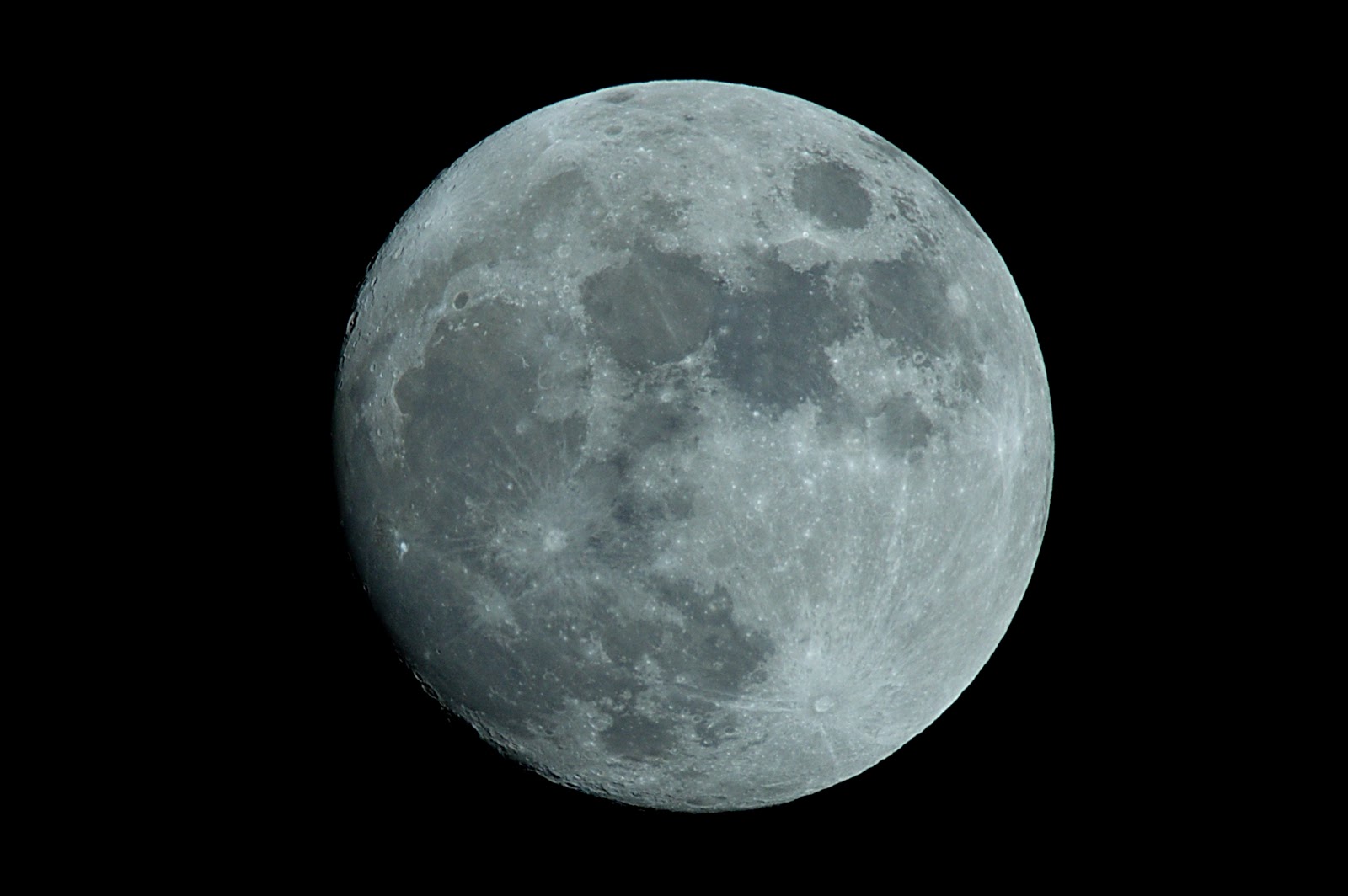
I've had the lens for about 3 weeks now, but my chances of trying it out have been limited by circumstance and weather. Taking pictures at birds in the garden through double glazing were never going to show the lens in its best light(sic). So the only thing I managed to take a photo off was my perennial target, the moon, Saying that, the results were quite impressive.

However yesterday I had a chance to go on a photography session at a local nature reserve at Attenborough so I thought it would be a perfect opportunity to try it out.

Of course I was hoping for good light. What we actually got was par for the course this winter which was torrential rain. So it wasn't exactly perfect conditions. However despite this the results  were really quite good.

The extra reach really helped to get photos I would never of managed before. The downside were that because this was not that fast and the light was awful, I was forced to push the ISO higher than I wanted so had more noise.

The other impressive thing is the speed of the zoom and focusing, plus how quiet it is which is essential for birding.

In terms of handling, I had taken a monopod, but in the end I found I could handhold it or rest it on the  hide wall quite well. The downside is that it is a big lump to carry around and because of the weather I was forced to have the camera under the coat most of the time which definitely was not comfortable and probably made me look a bit weird. Also this is not a camera to take photos of birds in flight easily.

I did buy a sling strap for it, but I have not built up enough courage to risk it with such an expensive bit of kit, but in the long term I will have to use it if I go out a lot with this lens

Anyway here are some of the results

A young Grebe from the hide.

A red crested pochard. This was a bit of a cheat, since this is obviously a escapee and relatively tame, but the long lens allowed me to get far greater detail


A tufted duck. Not rare but nice to get close in

Probably the best 'bird on a stick' image that I have ever taken. A still subject, plus the extra reach really helped. This was handheld, even so it is sharp. The bokeh is nice too, being blurred but not indistinct.

An Egyptian goose giving me the evil eye

A female mandarin duck


A long range shot of a Goldeeye. While no a keeper, no way would I have got anything close to this before

Similarly a pair of widgeon

Conclusion

For the money this lens is fantastic value. While it is not going to get you the same image quality as a fast prime, in good light it will deliver and at the same time give you the flexibility a zoom provides.

However this is not a lens you carry around all the time. It is bulky and large. A sling type strap is essential to carry comfortable and a rain cover is useful too.

So all in all i am very happy with the lens. All I need know is the opportunities to use it in good weather

Thanks to Iain McMillan for spending the morning with us and providing advice, feedback and humour on a pretty awful day weather wise

P.S if anyone finds a Lens case at Attenborough its mine!

Wednesday, 19 August 2015

Where do I go now?


I have probably taken more photos, of more subjects, in more different genre's this summer than ever before (as evidenced by my straining hard drive). It could be said that for the first time I have tried to take my photography seriously.

I hoped that by now I would have a clear direction as to what I want to achieve as a photographer.
However despite all this activity I am still pondering the question of where I want to go.

I realised sometime ago that a scatter gun approach will only get me so far, but at some point I would need to concentrate on a fewer number of genre's. I hoped by now I would know which ones.

My first choice would be to concentrate on landscape photography.

However this summer has shown the challenges in that (at least in the short term).

Partly the issue is down to  my equipment. Quality landscape shots require high quality lenses and cameras with high mega pixel counts. The truth is my camera is always going to struggle to get the quality needed.

The 2nd issue is that every man and his dog has a go at landscape photography. The result is there is a lot of landscape photos out there, many of them very high quality. Don't get me wrong, extra competition should never stop you trying to be the best, but it does make it more difficult to stand out from the crowd. After all as photographers we all want to be noticed. In a crowded market place this is all the more difficult

However neither of those problems are insurmountable. The first just requires money (Hah!)  and the second talent and application (Double hah!).

The most difficult obstacle however, is time. I am sure there are some photographers who can role up to an area, get a stunning shot, and move off, but most great photos take time and patience. It is only because we only see the end result without the seeing bloodshed and tears that went before it that we think it is easy. Great photos take time to scout the view, setup the camera and wait for the right conditions. Even the best photographers cannot control the elements and the seasons.

To increase the chances of getting a great photo, you need the time to experiment and the opportunity to fail and learn. You also need the time to be patient.

Yes, with a bit of luck you can that great photo with one visit, but it you are more likely to succeed if it is a landscape you know well and you have the time to visit often, so that the changing seasons and weather can bring new elements to your photo. Also it is likely that once you have reviewed your photo you want to return and try again. As a photographer you should always be looking to improve that image. The opportunity to continually revisit and refine an image is an important part of getting that great photo

However if, like me,  you have to balance work and family with your photography, you will always be at a disadvantage. Landscape photography is probably the most time consuming genre, requiring extensive travel, and always being at the whim of weather and conditions . To do this well I would need to reduce my time spent on either my family or my the work  that pays for my hobby.

This is not going to happen, at least in the foreseeable future.

My photography will always be squeezed between work and family commitments, meaning my images will be more dependent on luck that patience.

The same goes for the other area which I would like to improve, bird and wildlife photography. Yes, you can get good bird photos with average equipment and in your back garden, but without the right equipment, patience, location and opportunity, you will always suffer in comparison with others.

So what to do?

I think the answer is I need to cut my cloth to my situation and talents. I need to concentrate in areas I have the best opportunity, but also areas that I can bring something unique to the genre

I recently realized what genre this might be.

One of most fun projects is playing with my DIY IR camera. I think I have enjoyed the challenge of getting the camera to work as much as the photography. Other projects I have taken on such as my glass smashing work I have had similar enjoyment from.

These have common elements. Firstly the work can be largely at home. Secondly it requires problem solving. Now in my day job is as a computer programmer (posh title - Software Engineer), problem solving is what I do, and I'm quite good at it (if I do say so myself). Also it means I am not scared of getting my hands dirty with computer hardware and software.

Without being too smug, it is an area where I have skill outside the scope of many photographers. It is also work I can largely can do at home.So I feel this is an area I can concentrate on and make an impact.

Of course I still want to improve my photography in other areas, but special projects (as I like to call it) is an area which I feel I can excel at.


Wednesday, 14 January 2015

The results are in....

As I mentioned here, recently we had the Tom Tivey competition for Natural History and Landscape at the Melbourne photographic society.

Most photographers at some point will have a go at landscape and/or natural history subjects. As a result the competition standard was very high, with some excellent photos on show.

Of course, as with any competition, one of the most important factors is the judge and last nights judge was excellent. Often judges only concentrate on the imperfections in the image, but this judge generally only provided positive comments and gave some good advice as he did so. I thought he made a potentially stressful evening, quite enjoyable.

Of course, as with any judge, you will have a difference of opinion in his choices, and I did not always agree with some of his marking. However the overall winner was definitely deserving of the main award.

In theory, judges should be unbiased and base their choice on the artistic and technical merit of the photo. There is a marking scheme that they should follow. But judges are human (in the most part :) ), and as swayed as much as anyone by there own experiences, and prejudices. One consequence is that they tend to concentrate on the technical aspects and avoid artistic merits (which are harder to judge). However as a result, I was aware that sometimes the judge and my own photo philosophy perhaps did not entirely mesh.

For example, when I take a photo of a wild animal, I think it is important that you put it in the context of it's natural environment. This judge however seemed less bothered by this.

So saying all that, how did my entries do, and what did I gain from the experience?

Well, if the  truth be told , I was a disappointed with my marks. My prints all got 16 each, which sounds like  good results, but were in fact a average mark(You are really looking for 17 and above). My DPI's scored 14, 15, 16 out of 20. Again this sounds good, but it was clear last night that the judge was only scoring between 14 and 20, so 14 was in fact a low score.

But was the judge right to mark as he did?

To decide I have gone back to some of the photos and changed them based on his comments. I have then compared them to see if the results are significantly improved.

Exhibit 1


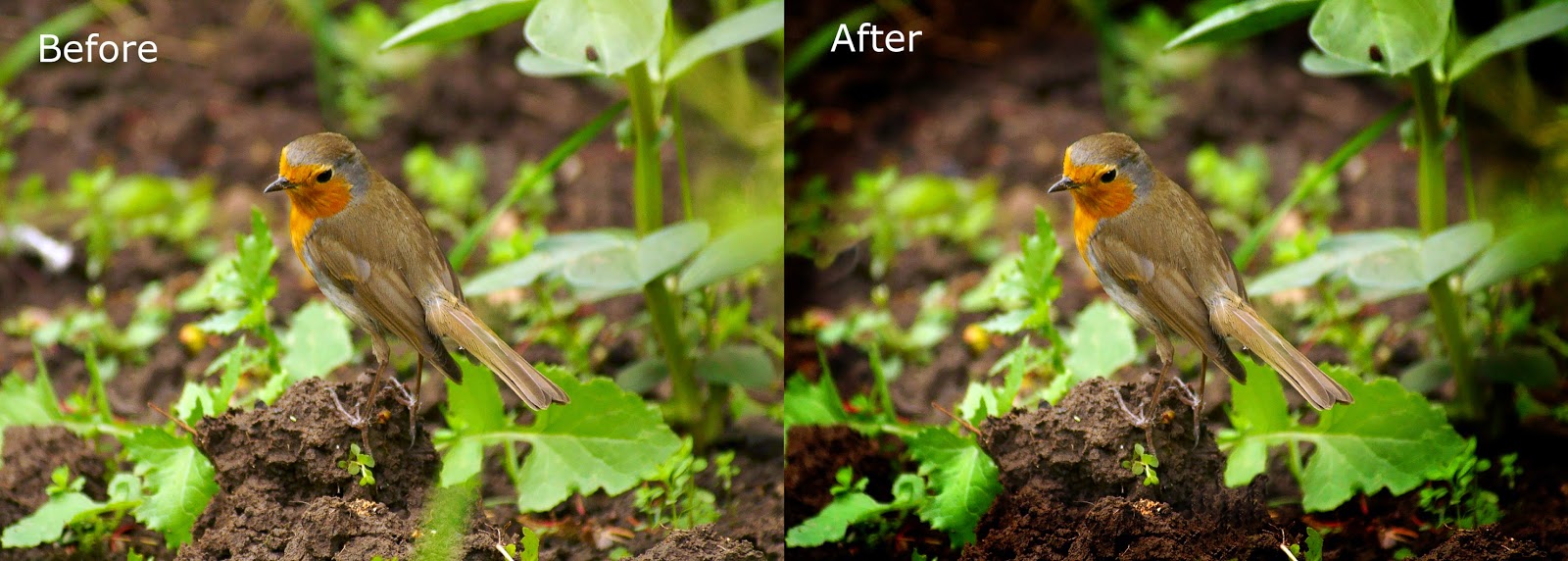
This photo scored 15. The judges main issues was the white blob on the left side of the photo (actually on the big screen the green area in the bottom center caught my eye more).

However is biggest issue (and this was mentioned a number of times) was the lack of catch light in the Robin's eyes. He suggested adding a artificial catch light to lift up the eye and provide more of a focal point.

I must admit this is something I have done in the past (I would prefer that it was in there naturally, but animals are rarely that obliging). It sounds like a good idea and the effect can be good when done well.

However here is the issue. Doing it well is not that easy. You can not just add a blob of white on the eye. It has to look natural, and that means it has to be consistent with the lighting.

The easiest way of achieving this is to enhance a natural reflection in the eye. In the case of the Robin, there is one, but it is small and enhancing it actually does not make a huge amount of difference.

The other big change, apart from removing some of the more glaring artifacts, is that I have added a vignette to the photo. I am in two minds about this. OK, it helps concentrate the eye on the subject, but it also removes some of the natural element of the photo.

So do I think the advice improves the photo?

Well I give the advice a strong  8/10.

I think it does make it better, but in truth maybe it wasn't the best photo to enter in the 1st place

Exhibit 2


This one was originally given  16 marks.

His main complaint was that it would of been better with the subject and reflection central rather than further down.

He may be possibly right, but I really wanted to show the Avocet in it's natural surroundings and to do that I wanted as much space around as possible. This is one situation where a vignette probably degrades rather than enhances the image.

So 5/10

Exhibit 3


This one garnered 15, which I thought was under-marked. 

His suggestion was that it should be closely cropped and the bird moved to one of the thirds composition lines. 

I must admit I had my doubts, but after trying it, I think he was right and it make a more effective photo without removing the natural history element. 

So for this one 9/10

Exhibit 4


This one was given 14, which I think was severely under-marked. OK, I knew at the time that this was a risky entry, but it is one of the photo's which I feel the judge missed what I was trying to achieve.

It is titled "Murmration" and it is a picture of Starlings as they flock before roosting. Now the judges comment was that it would of been better if it had been the picture had been of the shapes of the Starling as they clump and move.

Here I disagree.

What I was trying to show was the speed and movement of the Starlings. Zooming out and showing them as dots, then they would just of been dots. (Maybe it would of been better if I had called it "flocking Starlings")

This way we can see them as Starlings. Now It could be argued that the powerlines distract from the image. My feeling is that it is marginal, and could even provide visual interest in the background. My only concession is that maybe cloning out the upper power line is a slight improvement.

Nor do I think that cropping closer, as suggested, helps in any meaningful way.

So here I have to give 2/10

Summary 

In hindsight it is obvious that maybe some of the photos could of been improved by better cropping or more visual processing. Also I perhaps entered the wrong photo. Vignette is not a technique I greatly use, but perhaps I should think about more in the future.

On the other hand, sometimes you just have to believe in yourself and work to what you feel is right and hope the rest of the world catches up. Is that pompous? Maybe, but if we don't do this, we will just continue to trail others, rather than setting our own path.

Saturday, 20 September 2014

Something for the weekend

Just clearing up a few photos which I decided to show to the world.

First are three pictures from Titchwell RSPB reserve in Norfolk.

Titchwell is a reserve I know well having been there many times and I always manage to see something of interest. One disappointment was the Marsh harriers had decided not to visit on that day, but I did get close to Teals, Ruffs,  and Bar tailed Godwits.

As always I did not really have enough time to get the shot I wanted. Also I was slightly overawed by the equipment some some off the fellow photographers had. Some had 400mm and bigger lens with 2x converters on. My trusty 300mm was never going to compete with that.

However I did get a few shots that could be buffed up a bit.

Avocet. Elegant bird. If you can't get a good shot of an Avocet, give up now

For a long time I said this was a Dunlin, which shows how bad I am at wader ID. It is of course a Bar tailed Godwit

A rough Ruff

I also had a afternoon around Bradgate deer park recently. Unfortunately I had mis-timed it and assumed it was the annual rut.

Instead of nice packed herds with battling stags, the deer were well spread. Despite being large animals, it is amazing how well the blend into the background.

However I did find this handsome fellow


He was next to a watering hole, obviously readying itself for the battle ahead. It was obviously one of the Alpha males and very impressive he was too.